NASA Releases New Planetary Protection Standard
August 31, 2022
2-minute read

NASA’s Office of Safety and Mission Assurance released NASA-STD-8719.27, Planetary Protection Standard, effective Aug. 30, 2022. The standard is a follow-on document complementing NPR 8715.24, Planetary Protection Provisions for Robotic Extraterrestrial Missions. It addresses and is relevant to both crewed and robotic missions and covers the technical details a mission should consider for the design and execution of the Planetary Protection mission throughout the project life cycle. It is relevant starting in the Mission Concept Review and System Requirements Review phase by defining the Planetary Protection categorization to end-of-mission disposal reporting.
New Explosives Safety Course for Managers, Supervisors and Non-Explosives Personnel
August 18, 2022
2-minute read

NASA’s Explosives and Pyrotechnics Safety program recently released “Explosives Safety Awareness Training for Managers, Supervisors and Non-Explosives Personnel” (SMA-HQ-WBT-222) in SATERN. This online course provides an overview of Explosives Safety flow-down requirements and responsibilities for program, project and element managers throughout NASA. It emphasizes the responsibilities of personnel and safety awareness of operations that involve the handling, storage, transportation and processing of explosives.
Updates to Payload Safety Policies Support New and Existing Programs
August 08, 2022
2-minute read
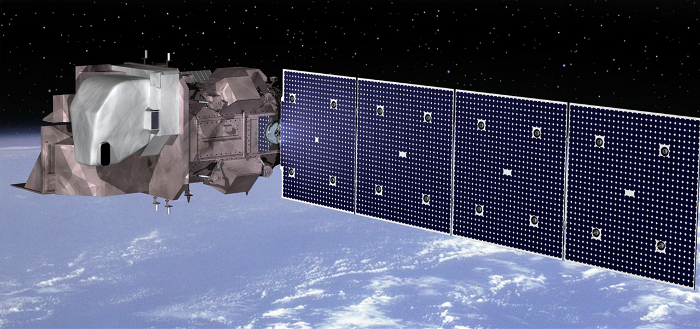
The Office of Safety and Mission Assurance enhanced the Payload Safety program to cover all payload projects. As part of this process, the program recently released a revision to NASA-STD-8719.24, NASA Payload Safety Requirements, effective March 20, 2022. This standard update followed a significant revision to NPR 8715.7B, NASA Payload Safety Program, effective April 27, 2020.
Updated Range Flight Safety Course Improves Training Experience
August 08, 2022
4-minute read
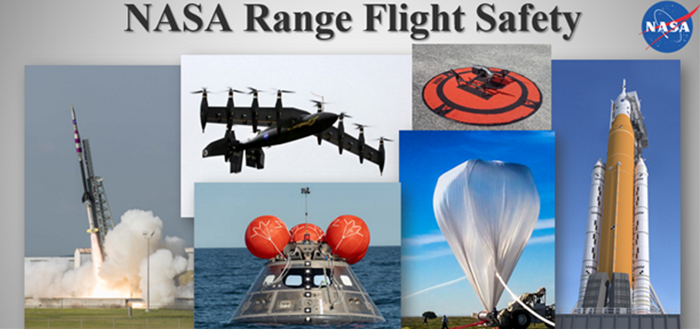
The NASA Range Flight Safety Program, with support from the NASA Safety Center, recently released an update to “Range Flight Safety Analysis” (SMA-AS-WBT-435), available in SATERN. The new training includes recent policy changes, updated materials and the new Federal Aviation Administration Code of Federal Regulations Part 450 requirements. It also converts previous in-class exercises to instructor-led demonstrations.
New Course Introduces Key Planetary Protection Concepts
August 01, 2022
2-minute read

Last month, the Office of Safety and Mission Assurance and NASA Safety Center released “Planetary Protection Overview” (SMA-STL-WBT-300) in SATERN. The new course includes the definition of Planetary Protection, details of its implementation and practices, and information about its applicability to some of NASA’s space flight missions.
NPD 8700.1 Restructured to Focus on Evolved Agency Needs
July 28, 2022
4-minute read

NASA’s Office of Safety and Mission Assurance (OSMA) updated NPD 8700.1, NASA Policy for Safety and Mission Success, effective July 28, 2022, building on developments from the past decade, including experiences from commercial crew, discussions about robotic mission classification, changes to the agency’s governance handbook and NASA Aerospace Safety Advisory Panel recommendations. OSMA solicited and incorporated feedback from centers, mission directorates and other offices into the final release.
MCWG Holds Hybrid Technical Interchange Meeting
July 13, 2022
4-minute read
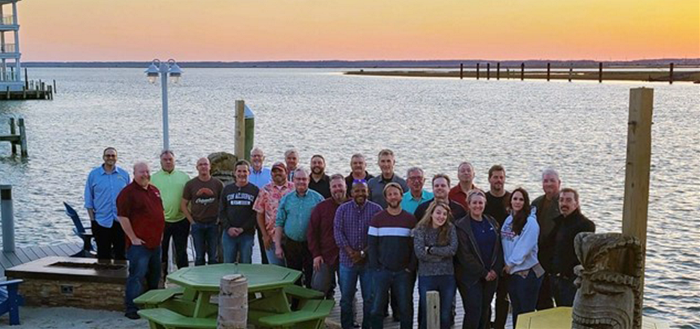
The Metrology and Calibration (MetCal) Working Group (MCWG) held its annual Technical Interchange Meeting (TIM) April 25-28, 2022, at NASA Wallops Flight Facility. Agency MetCal representatives, calibration laboratory managers, metrologists and other experts from associated fields across all of NASA’s 10 field centers, and two component centers, met in-person and virtually at this hybrid event to discuss technical challenges, best practices and improvements related to the agency’s MetCal program.
NASA Collaborates With External Organizations to Improve Workforce Development
June 29, 2022
6-minute read

NASA’s radiation effects community, with support from the NASA Electronic Parts and Packaging program, collaborated with Texas A&M University academia and Radiation Effects Facility staff to develop a radiation effects training “boot camp,” first held in February 2022, with plans for future annual training. The boot camp was in response to a National Academy study called “Testing at the Speed of Light,” that looked at the available U.S. infrastructure available to provide the types of energy and ions used to do the type of spaceflight testing NASA aims to do and also the people available to do the work. Training included attendees from government, industry and academia.
ISHMC Meeting Brings Together Institutional Safety and Health Experts
May 25, 2022
3-minute read

The Institutional Safety and Health Managers Council (ISHMC) brought together safety and health leaders from across the agency this April at Kennedy Space Center. The meeting marked the beginning of a new approach to safety and health management at the agency level.
O’Connor Honored for Career Embodying Yes, If Attitude
May 18, 2022
3-minute read
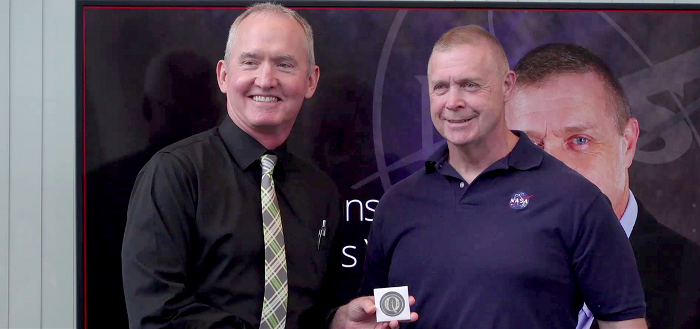
Ken O’Connor, Mishap program executive at the NASA Safety Center, received the “Yes, If” coin from Chief of Safety and Mission Assurance Russ DeLoach during his retirement celebration on May 5. O’Connor retired after more than 30 years of NASA service.