Setting Her Own Path Led Amy Baker to a Meaningful Career in Planetary Protection
Amy Baker, Planetary Protection project manager for the SETI Institute, is set to retire at the end of June 2024. In recognition of her contributions to the Office of Planetary Protection and NASA’s mission, the Office of Safety and Mission Assurance would like to honor her achievements and acknowledge her important work in support of the agency. 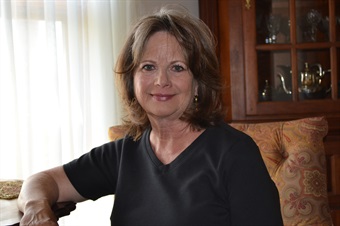
When Amy Baker set out independently after working with Lockheed Martin Astronautics on the Mars 98 lander, she didn’t know her professional journey would lead to a 25-year career in Planetary Protection (PP).
“After the Mars 98 lander mission launched, I wanted to pursue my own path, but I really didn’t know what that was, other than I wanted to work for myself,” said Baker. “At the time, there were very few opportunities, so I started my own one-woman consulting business.”
Baker registered a name, Technical Administrative Services, and contacted everyone she’d previously worked with to express her interest in technical or administrative work. Her list of personal contacts at NASA made it easy to gain a foothold with the agency and hit the ground running.
“I started in Planetary Protection almost immediately, supporting research studies that NASA funded and I eventually contracted to NASA centers” said Baker.
Throughout her career, Baker not only worked with NASA directly, but also with Ball Aerospace, Lockheed and the Jet Propulsion Laboratory.
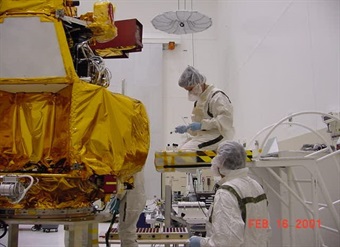
Baker supported both the Office of Planetary Protection (OPP) and NASA with the implementation and validation of PP requirements on flight projects and supported NASA Headquarters in performing assays associated with the independent verification of spacecraft cleanliness during assembly.
Baker collected assays and supported OPP with project technical review and monitoring, and at the request of OPP, provided independent onsite sampling audits of Mars-bound flight missions including Mars exploratory rovers, the Mars Science Laboratory and most recently, Mars 2020. She also managed and worked on both MAVEN and InSight missions as the onsite PP lead.
“It is so amazing to look back and realize that I contributed to the discipline of Planetary Protection during a pivotal time of Mars exploration.”
In 2015, Baker joined the SETI Institute, a non-profit research organization, to continue her work in PP.
Her entrepreneurial spirit, technical expertise and passion for the PP discipline were appreciated and admired by her colleagues at NASA.
“Amy is a truly admirable role model for women in science and engineering,” said Elaine Seasly, Mission Assurance Standards and Capabilities division director. “From starting her own business and forging her own path early in her career to helping OPP in updating the entire suite of Planetary Protection policies and technical standards, Amy has been the constant source of knowledge and expertise that has helped NASA evolve the field of Planetary Protection.”
Baker also has the distinction of working on all the planetary missions and orbiters with PP requirements since the Pathfinder mission, an achievement she takes great pride in.
“It is so amazing to look back and realize that I was part of all of that and contributed to the discipline of Planetary Protection during a pivotal time of Mars exploration,” said Baker.
Later in her career, she enjoyed working for OPP during its transition to the Office of Safety and Mission Assurance. She views her experience working with Seasly, Nick Benardini, Planetary Protection officer, and Lisa Pratt, former Planetary Protection officer, as a great way to finish up her professional life.
Benardini shares this sentiment and acknowledges Baker’s many contributions to the discipline.
“Amy has served as a key player for OSMA in developing and aligning Planetary Protection independent verification to industry standards,” said Benardini. “She has been critical in developing both the European Space Agency’s and NASA’s PP Quality Control and Quality Assurance laboratory programs and has always been a team player, looking out for the best interest of the discipline as her first priority.”
For someone who “fell into” an aerospace career after college, Baker made the most of the opportunities presented to her. Upon earning a degree in chemistry from the University of Wyoming, she pursued her position with Lockheed Martin and gained her first exposure to engineering projects, laboratory work, failure analysis and PP.
“The field for Planetary Protection was just re-developing in the early 90s and I was one of a small group of individuals working in an emerging field,” said Baker.
She is proud of her longevity in PP and is grateful she was able to make it her career from the beginning of her professional pursuits, even if it wasn’t part of an initial plan.
“I feel I have seen so much and watched the discipline change and grow,” said Baker. “I hope that my longevity and experience has been helpful to NASA over the years.”
According to Baker, one of the most interesting parts of her job was instructing students who were part of a PP training class she ran.
“The first mission that I worked on failed, and I think the lesson is patience, flexibility and an awareness of how you frame these events.”
“Everyone had a different understanding, need and opinion of Planetary Protection requirements,” said Baker. “I really enjoyed the engagement from individuals across the aerospace industry who took the course.”
During her time supporting OPP, she came to accept the unexpected changes that are result of the dynamic NASA environment and began seeing failures as learning opportunities.
“The first mission that I worked on failed, and I think the lesson is patience, flexibility and an awareness of how you frame these events,” said Baker. “It sounds cliché, but failure or change opens new paths and opportunities. Some paths I took because I had to at the time — I would consider myself a resilient opportunist — but everything had a purpose and led to something better, more interesting or unexpected.”
Baker believes the mission experiences reframed her view of “failure” and how to process it when it happens.
“Learn, adjust and continue to work hard; I don’t think too much about failing,” said Baker. “I have been very happy in my career and am grateful for experiences — good and bad — that I have had.”
In fact, Baker’s most impactful on-the-job memory perfectly illustrates her belief that experiences can be meaningful, regardless of a mission’s end result.
“Planetary Protection is a very high-energy pursuit and there is always something else coming up, so don’t procrastinate; get up and get busy."
“The most significant professional memory is really my first launch — the Mars 98 Polar Lander,” said Baker. “Being on the beach at Kennedy Space Center with my colleagues, a small, but close ATLO team, was really one of the most moving experiences I have ever had. It was the culmination of two years of hard work, having touched something that would go to Mars and the wonder of seeing the spacecraft literally leave Earth was profound.”
Beyond providing her with a meaningful and fulfilling career, working in PP also taught Baker to embrace a mindset she plans to take with her in the next stage of her life.
“Planetary Protection is a very high-energy pursuit and there is always something else coming up, so don’t procrastinate; get up and get busy,” said Baker. “I hope to maintain that momentum when I retire.”
For all that Baker learned throughout her career in PP, she also taught her colleagues important lessons along the way.
“I think what I have learned the most in working with Amy is to always keep pushing to make things better,” said Seasly. “Never stop and think something is “done” and can be put on a shelf because there is always a fresh new approach that can be brought into what we do. Planetary Protection will continue to grow and change to support mission challenges if we keep this lesson in mind.”
As Baker looks toward retirement, she plans to spend time with family, enjoy the outdoors, garden and relax at her home in New Mexico. She also looks forward to focusing more fully on volunteer efforts in her community, specifically supporting her local food bank.
Reflecting on her career, Baker is humbled by her experiences, the projects she’s supported and the people she’s worked with.
“I’ve been so fortunate to work with NASA on so many missions,” said Baker. “So many opportunities and unique experiences. I’ve had a great career.”